Social Rating Systems

By 2020 (in less than 3 years), the government of China plans to have a system that assigns each person a social rating based on the person’s financial transactions, how he or she behaves in public and at work, etc. Already, face-recognition technology installed along streets detects jaywalkers and displays their photos on large public screens. These systems and more would be linked together to create the social rating.

Creative Community7.jpg

Several Chinese companies already partially implement a slimmed down version of this system as part of their normal services. The United States has a smaller version of this in its "Credit Score" system.

This BBC article can serve as a starting point for investigating this system and others similar:

China 'social credit': Beijing sets up huge system

Commercial systems that are currently implemented, for example with Sesame, Alibaba and Baihe, Chinese users seem to accept the social score as something good. As is quoted in the article, "Credit systems build trust between all citizens."

Research, Analyze, Decide, Propose

Assume the role of a data engineer at either Google, Facebook or Amazon. Each of these companies compete globally with Alibaba. Your department head has asked you to put together a short memo that would persuade her executive vice president that the company should use the massive amount of data it gathers on its members to creating a "social rating" also. 

Post at least two carefully supported reasons why Google or Amazon should pursue this strategy. 

Post reasons why customers of Google, Facebook or Amazon would resist a social scoring system? What differences (if any) are there between Chinese citizens, and citizens of America, India or other nations?

For the classroom: Comment on at least one other classmates posts. "Like" a classmate's post that was particularly persuasive and comment why.
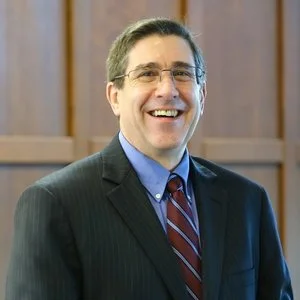
Timothy Henry

Tim began his IT career as an officer in the U.S. Coast Guard, and among his early tours, he was the Information Resources Manager (what is today a CIO) at the Coast Guard's training center in Yorktown, VA. This was during the early days of personal computers and the automation and networking of many management, financial and training activities led to a tremendous number of interesting challenges.

Dr. Henry then switched over to education and taught mathematics and computer science courses at the U. S. Coast Guard Academy. As his time there ended, he was offered a great opportunity to work with 'bleeding-edge' technology in a research and development environment. These projects involved cellular phones, GPS and touch screen technologies as components of larger integrated systems at a time when those technologies were just coming into the market place. He oversaw projects for law enforcement, first responders, healthcare, and education. For the next decade he continued to work as a project manager on large corporate- or state-wide information systems. During that time, he obtained his Project Management Professional (PMP) certification. 

He then returned to a university setting where he has been teaching in a broad array of computer science and information technology fields for over 15 years. He now serves as IT Graduate Director at the New England Institute of Technology. While at NEIT, Dr. Henry has developed and taught courses in a number of areas including programming, software engineering, databases, game development, operating systems, digital forensics, cybersecurity, ethics and project management. In addition to co-authoring A Gift of Fire: Social, Legal and Ethical Issues for Computing Technology with Sara Baase, which won the 2018 Excellence Award from the TAA, he has co-authored two data structure textbooks with Frank Carrano, Data Structures and Abstractions with Java and Data Abstractions and Problem Solving in C++: Walls & Mirrors which won the 2018 McGuffey Longevity Award from the TAA.

https://timothyhenry.net
Previous
Previous

Selling Our Internet Activity